Fascia Work
Hands on therapy as
well as exercise prescription

What is Fascia?
*
What is Fascia? *
Fascia: The Bit That Holds You Together (Literally)
Fascia is having a moment — and honestly, it deserves one.
If you’ve ever felt:
stiff but not “tight”
strong but oddly uncoordinated
sore in places that don’t make anatomical sense
That’s probably a fascia thing.
Fascia work isn’t a mysterious add-on. It’s how I understand your body, how I assess movement, and how I decide what kind of strength work will actually help.
What Is Fascia? (No, It’s Not Just Tight Muscles)
Fascia is your body’s connective tissue network.
Think of it as:
a 3D web
wrapping muscles, organs and joints
linking your feet to your head
helping force travel through your body
You don’t move muscle by muscle.
You move via lines of tension and connection.
Which brings us neatly to…

The ATSI Lines of Fascia (The Maps I Actually Use)
I assess clients using the ATSI (Anatomy Trains Structural Integration) lines of fascia.
In simple terms, these lines describe how fascia connects different parts of the body into functional chains, such as: Superficial front line, superficial back line, lateral lines, spiral lines, arm lines etc. You don’t need to know what these are BUT…
These lines explain why:
a shoulder issue might start at the foot
hip stiffness can affect the neck
strength in isolation doesn’t always transfer
Your body is a system, not a stack of parts.
How I Assess Fascia (Standing Still & Moving About)
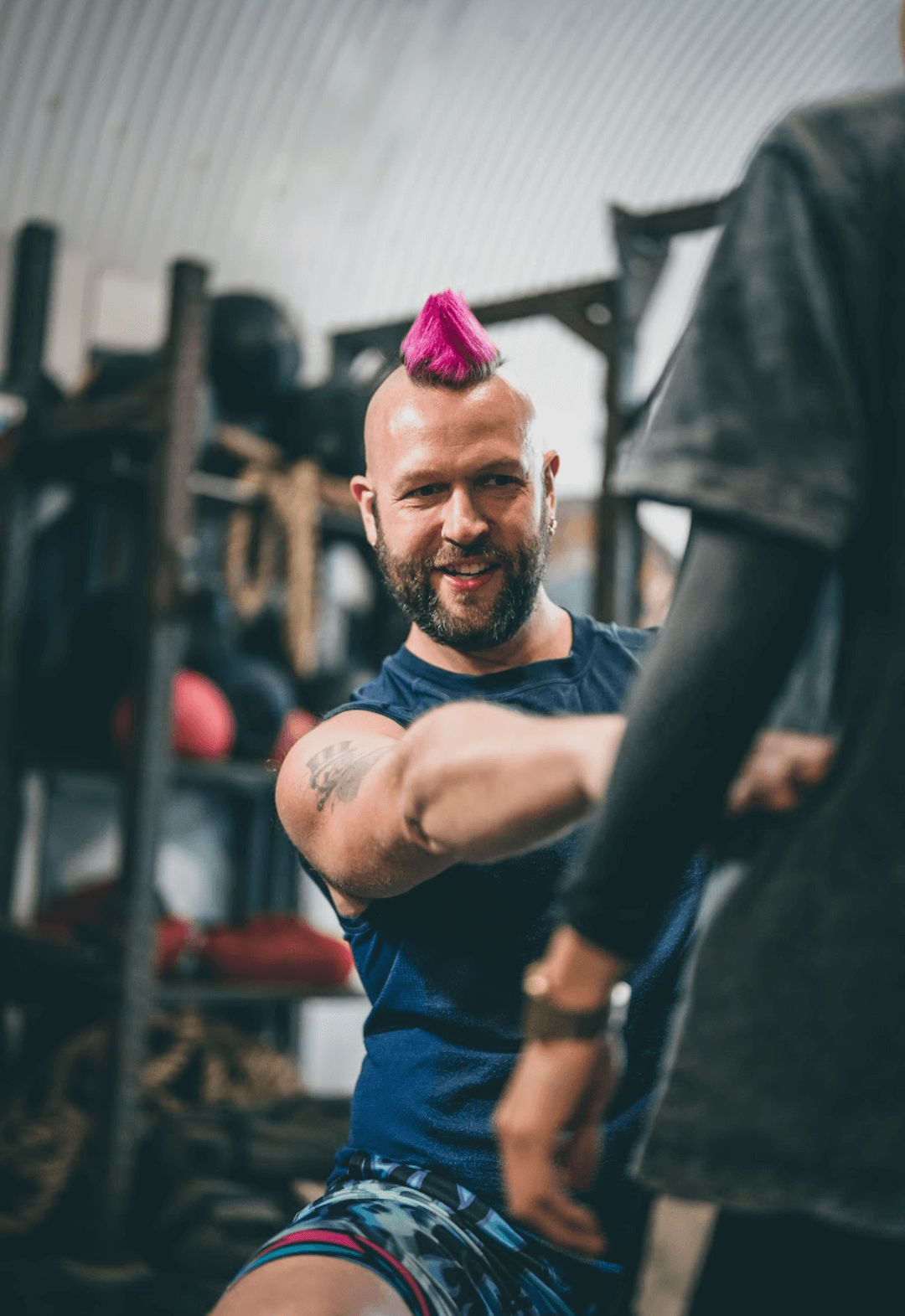
When you come to me, I don’t just look at how much you can lift.
I assess:
posture when you’re standing still
how you load and unload joints
how you rotate, hinge, reach and shift
how different lines of fascia engage (or don’t)
These mobility-based tests show me:
which fascial lines are overworked
which ones aren’t doing their job
where force is leaking
This gives us a roadmap, not a guess.


What Do I Do About It? Fascia Work: Manual Therapy + Movement (Not One or the Other)
Once we know what’s going on, fascia work can be divided into two parts:
1. Manual Fascia Work
This is hands-on work to:
reduce excessive tension
improve tissue glide
restore sensation and awareness
help tissues reorganise
It’s not about smashing knots — it’s about giving the nervous system better information.
2. Fascia-Smart Exercises
Manual work alone doesn’t stick.
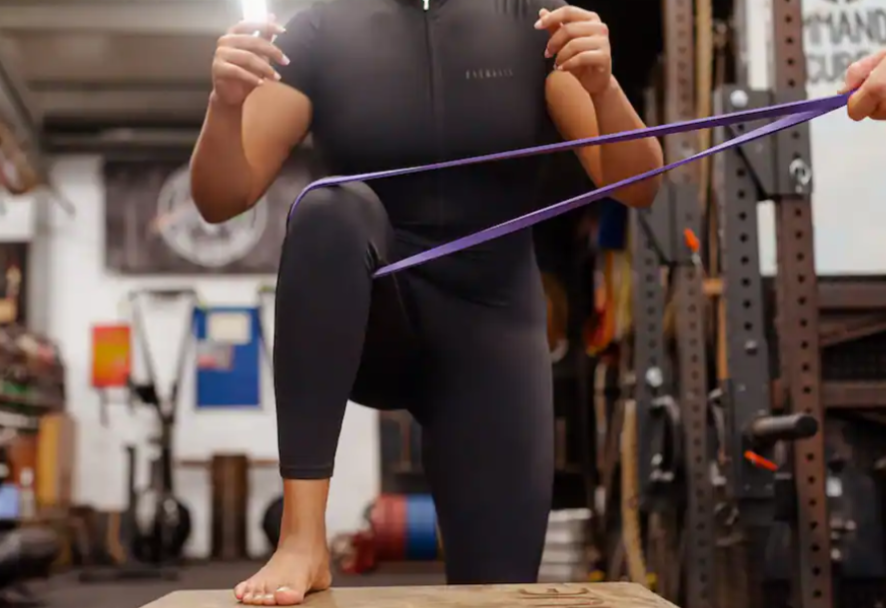
So we pair it with specific exercises that:
load the right fascial lines
encourage coordination
rebuild strength through connection
This is where the fun tools come in.

Who Fascia Work Is Especially Helpful For
Fascia-focused training and therapy is great if you feel strong but stiff, have recurring niggles, are returning from injury, struggle with coordination or don’t respond well to standard gym programmes. It’s also brilliant if you want to move better, lift with confidence or feel more at home in your body.
Why Ancient & Unconventional Tools Are Amazing for Fascia
This is where clubs, meels, bags and odd objects quietly outperform a lot of gym kit.
Clubs and meels are brilliant for fascia because they:
load the shoulders in circular patterns
access spiral and diagonal fascial lines
connect hands → shoulders → torso
reward rhythm and timing
They’re especially effective for:
shoulder rehab
upper-body coordination
restoring flow through the front and spiral lines
They don’t isolate — they connect.
Bulgarian bags are basically fascia training in disguise.
They’re great for:
rotational and lateral lines
linking hips, core and shoulders
teaching load transfer through the body
strength that doesn’t feel stiff or robotic
Because the bag moves, your fascia has to respond.